Skip to content
Masseria Ferarelli
The Etymology of Our Masseria’s Name

February 23, 2022

The Etymology of Our Masseria’s Name

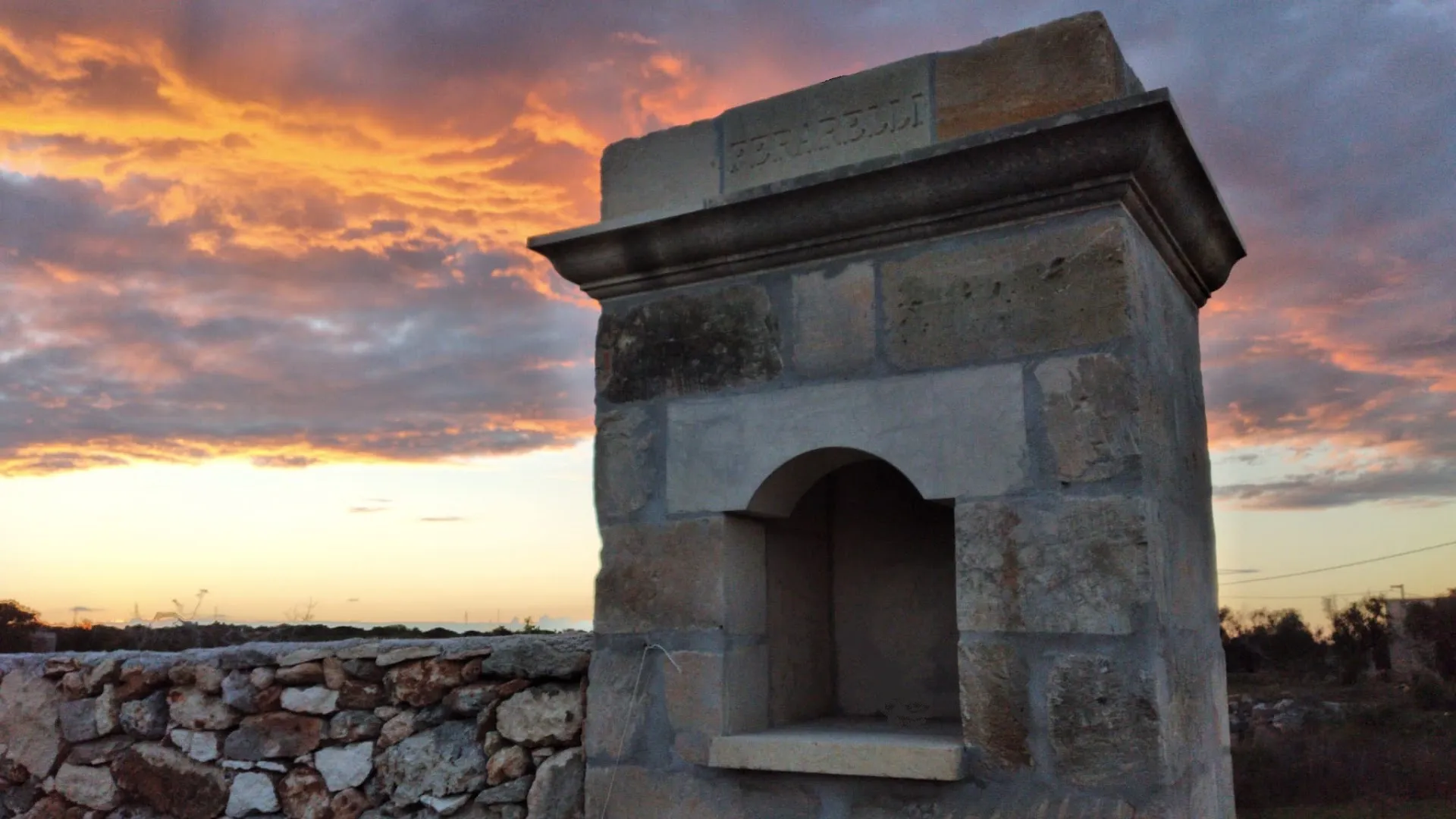
The Masseria Ferarelli - Trepizzi property covers about 15,000 m² in the Vicinale Doleo area, within the municipality of Diso, in the Province of Lecce, equidistant from the small villages of Diso, Marittima and Andrano. Our masseria lies right on the edge of the Costa Otranto - Santa Maria di Leuca and Bosco di Tricase Regional Nature Park, just 3 km from the sea (the Acquaviva cove) and about 4.5 km from the little piazza of Castro Marina. The property is the result of joining two plots that were previously known as:

Ferarelli (or Ferareddrhi): a local term that probably comes from the combination of the dialect word “fore”, meaning countryside, and “aricelli”, which refers to a small threshing floor used for threshing cereals but above all pulses, which have always been grown in this area and for a long time provided food and a living for the farming families of the area. The red clay soils found here favour the growing of pulses and give excellent yields. This plot has belonged to the Pagliara family for many generations and is still recorded in the land registry as a ficheto, that is, an area for growing figs;

Trepizzi: in dialect this literally means “three points”, after the triangular shape of the plot, which is bounded by Via Vecchia Castiglione and Vicinale Doleo. This piece of land is very special because in its recent history, that is over the last 150 years, it has served a number of purposes, which we have been able to piece together from the stories of the local elders: for the last 30 years, until it was bought by its current owners, it lay completely abandoned and uncultivated, which allowed wild vegetation to take hold and an astonishingly concentrated biodiversity of Mediterranean flora to flourish across just a few thousand square metres; before that, the same land was used to grow tobacco, another vital source of income in Salento until the late 1970s and early 1980s. The shape of this land and of the neighbouring plots, however, leaves no doubt about what it once was: a quarry of limestone tufa blocks that were “zuccati” by hand (zoccu is the pickaxe, hence the dialect term zuccare, which literally means cut with a pickaxe) and used to build the old villages nearby. This plot was acquired by the Pagliara – Lisci family in 2018.

You might also like

Our Most Important Legacy

Our Most Important Legacy

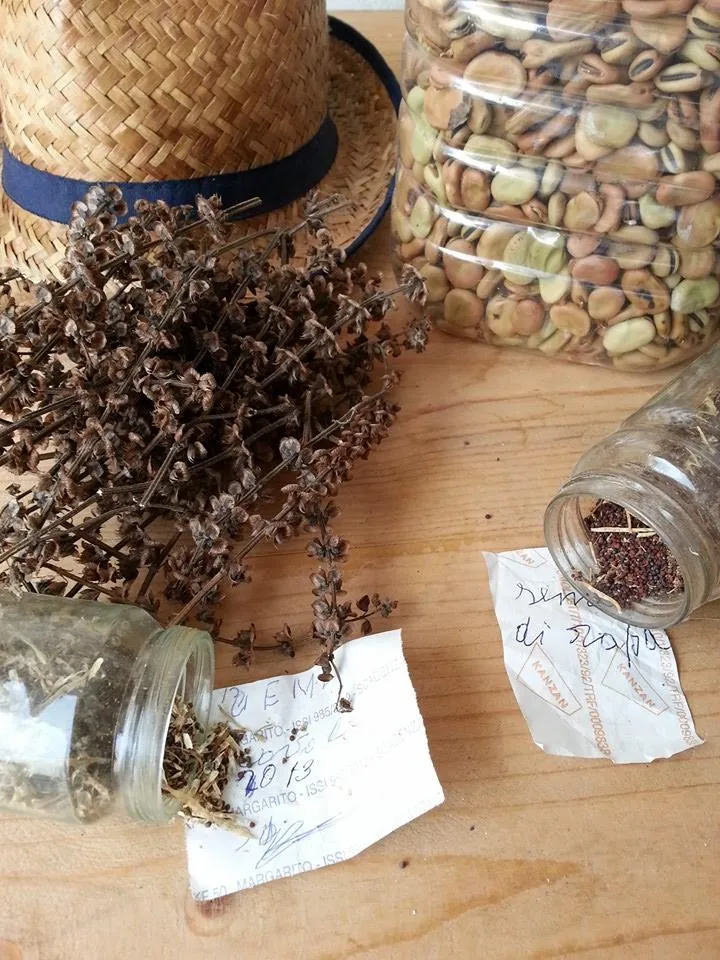
After Dad died, I found myself sorting out the storerooms and sheds at home and out in the countryside. Tools, sacks, mats, utensils of every kind (seemingly useless), salvaged and kept. And then ropes, nets, sheets… Stored in an old fridge used as a sort of safe, arranged in a myriad of containers of every type and shape (jerrycans, jars, screw-top bottles, boxes…), carefully selected and catalogued, there were a great many seeds. Pumpkins, Courgette, Meloncella, Round tomato, Winter tomato, Basil, Turnip tops, Mugnulu (Green Cabbage), Chicory, Romanelle, Onions, Garlic, Parsley, Celery, Chard… and then: Chickpeas, Black Chickpeas, Peas, Roveja, Broad beans, Lupins, Dòlica (Grass peas), Lentils, Beans, Black-eyed beans, Borlotti beans, Green beans… I stood there, amazed that, unlike the rest of the room, which seemed to be in total disarray, this corner, this fridge full of compartments, was so neatly organised... Mice! I told myself – he had arranged the seeds in the fridge like this to protect them from mice, it was obvious! I went back to the cleaning; I was in a hurry to tidy up and put things in order, throwing away everything that seemed useless to me, and that is what I did. I started with a thorough clear-out, trying to keep all the tools that might still come in handy, as well as the oldest ones, as a keepsake for the future. Sacks, ropes, canes, ladders: I sorted everything out, removing and throwing away whatever was superfluous, but there was one thing I couldn’t work out: how was I going to get rid of that bulky, ugly fridge? It was too heavy to move on my own and, above all, I had no idea where to put it… I’d think about it later. A few days later, while I was chatting with a friend, he told me that this kind of waste is in demand, because various materials such as iron, copper and other metals can be recovered from it. He gave me the number of a man who collected scrap metal: I could call him and he would take care of carting away that bulky piece of junk, and at no cost at all! I called him straight away and we agreed that the next day he would come and load up the fridge along with other scrap metal I no longer needed and had to get rid of. They say it’s always best to sleep on it, and so it was: in the night I was literally struck by a very simple thought: That fridge was the Legacy handed down to me by my Father. I didn’t sleep a wink all night and, afraid that “the scrap man” would take away my safe with Dad’s legacy inside, by 6 a.m. I was already out in the countryside… luckily it was still there! I carefully emptied the fridge, putting all those jars into wooden crates, so that the fridge was ready for the scrap man. The “Treasure” was safe at last; now I could get rid of the safe! That was where my passion for the countryside began.

A Distinctive Architectural Feature

A Distinctive Architectural Feature

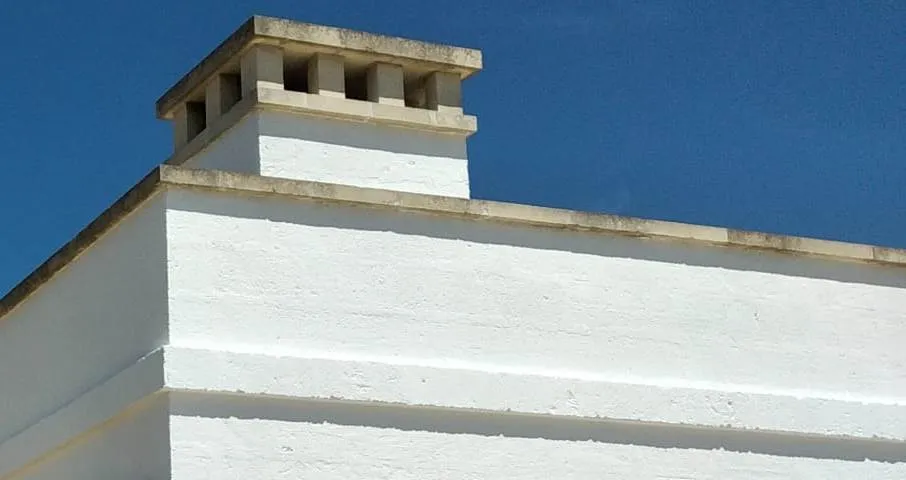
As our distinctive architectural feature we chose a chimney pot – or rather, our very own chimney pot! The chimney is connected to the fireplace (focalìre, cantune). That very fireplace which, to our mind, is one of the most important places in a masseria. The fireplace was where people met after a hard day’s work in the fields; it was where families gathered after dinner, often joined by their neighbours. Around the fireplace, the "cantune", in the warmth of the fire, people talked everything over. It was a place where age-old knowledge was handed down: how to tend the crops, the lunar phases for sowing vegetables, pulses, wheat, barley… The most experienced (the eldest members of the family) talked at length about the best methods and techniques for grafting, especially onto wild rootstock, or the best ways of clearing the land of stones, which were then laid into our classic dry-stone walls, while the youngsters and children played around this part of the house, which was the warmest of all. So in the past the fireplace served many purposes, such as heating, cooking, drying clothes… but its social role was without doubt the most important, and it helped individuals grow and rural society and culture develop.

The Citrus Grove Arab Garden (Čahār Bāgh)

The Citrus Grove Arab Garden (Čahār Bāgh)

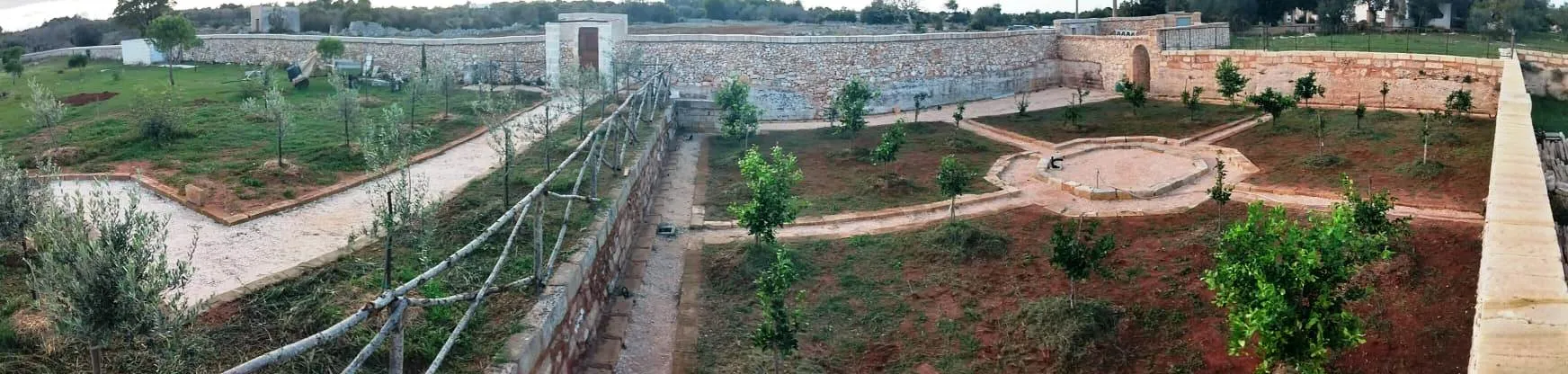
Our Citrus Grove takes its inspiration from the canons of the Arab Garden, seen as the expressive quality of the land brought out through human care, embracing the themes of water and shade. Its most recognisable architectural feature reflects the quadrilateral layout of the Charbagh (in Persian, "čahār" means 'four' and "bāgh" means 'garden'), with four smaller sections divided by paths. The number four and its multiples are constants in the planning and making of an Arab Garden. Unlike the English landscape garden and the Italian formal garden, often designed for strolling, the Arab or Persian Garden is meant for rest, reflection and contemplation. One of the main aims of the Persian or Arab garden is to offer a sensory experience that goes beyond sight, created through the scents and fragrances of its plants and the skilful use of water, aromatic herbs and flowers.