The landscape around Masseria Ferarelli – Trepizzi is shaped by small dolines (which is probably where the local place name Vicinale Doleo comes from), with fertile, arable soil at their centre and outcrops of rock, mostly calcarenite, along their sides.
The largest doline - or basin - in the area is called Conca d’Oro, the “Golden Basin”. The name probably hints at how fertile the area is.
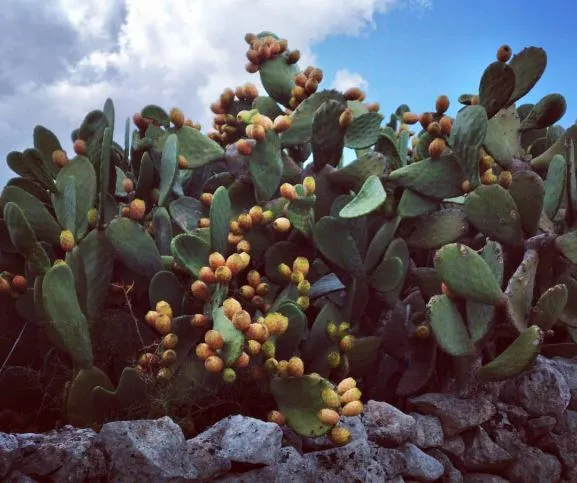
Since there were no large stretches of arable land, the great landed estates never took hold here, leaving room instead for small plots of Salento’s red earth divided by the typical dry-stone walls, built with the stones cleared from the fields and stacked along the boundaries of each plot. At the foot of the dry-stone walls, fruit trees such as figs, pears, quinces, prickly pears and vines were wisely planted, along with vegetables like artichokes and asparagus, to take advantage of the microclimate created by the absorption and release of moisture from the night dew (helped by the dry-stone walls during the hot Salento summers), which, drop by drop, was captured from the air and released into the soil below. This captured and released moisture was entirely to the benefit of the plants set right along the dry-stone walls.
We focused on these distinctive features of the land and landscape to enhance everything that was already there and to create the rest of the Mediterranean Garden of Masseria Ferarelli – Trepizzi. The idea came from a twofold wish: to preserve and enhance what already existed, and to make every single area of the property usable. We planted a variety of trees, shrubs and plants typical of the Mediterranean scrub, and created a rose garden, an aromatic herb trail and an orchard of citrus and local fruit trees. We also catalogued the old fruit trees and the existing olive trees, and expanded and enriched an old Varietal Collection of Salento Figs. The project was developed by our friend Bruno Vaglio, a well-known landscape agronomist specialising in the Mediterranean, who defined the spaces and the materials to be used and advised us on the plants and shrubs best suited to our project of enhancing the land.
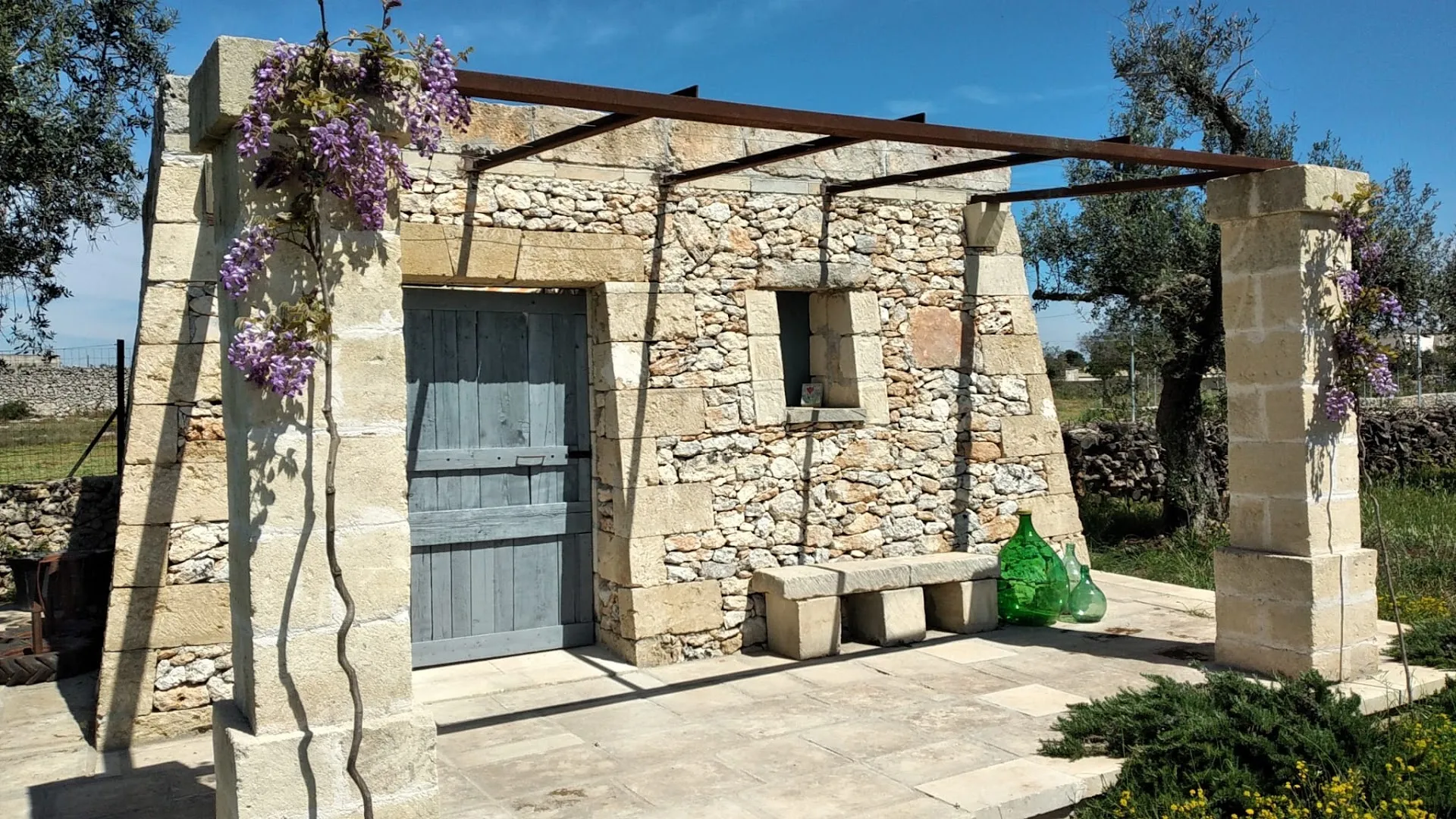
The whole property is enclosed by typical dry-stone walls about 1.50 m high, topped by a row of local tufa blocks. The use of cement has been kept to a minimum. To define the spaces and the paths, and to mark out and enhance the old quarry, we used the stones found on the land: the old, less regular tufa blocks quarried on site were combined with new squared tufa blocks, creating a contrast that brings out every single piece of stone salvaged and given new life, making it an integral, defining part of the rural landscape you find yourself immersed in.
Our Mediterranean Garden spreads over three levels, connected by small stone stairways and sloping embankments.
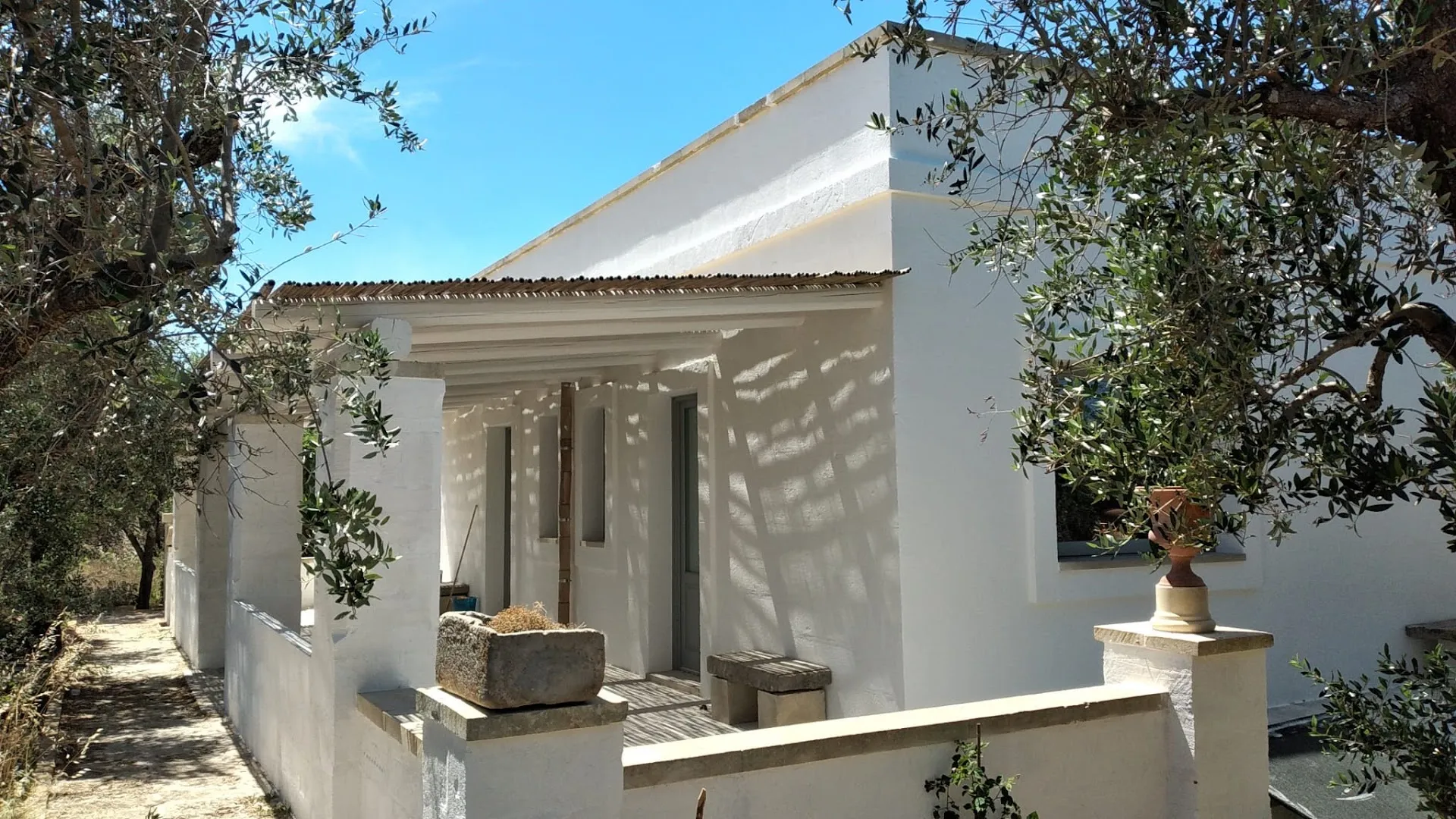
On the highest part – at about 101 m above sea level – in a privileged position slightly raised above the surrounding countryside, stand the buildings of the masseria, with the old threshing floor, the courtyard and the well at the centre, as well as what remains of our centuries-old olive grove after the scourge of Xylella, the small orchard, the typical stone pajara and the avenue of the Pergola with the Cistern.
The lowest part – at about 98 m above sea level – is sheltered from the winds, especially the tramontana and the other northerly winds; here you will find our Citrus Grove - Arab Garden and our vegetable garden, where the Pagliara – Lisci family grows pulses and vegetables. The drop between these two areas of the property is truly striking: it is formed by the imposing rock face of the centuries-old quarry, which still bears the marks of the tufa blocks cut by hand with pickaxes. This rock face continues as far as the swimming pool area, itself carved out of part of the old quarry, set slightly apart from the main building and surrounded by rocky ground with outcrops and highly fragrant wild vegetation such as wild thyme, mosses and lichens.
In the most sheltered part of the old quarry, as mentioned, we created our Citrus Grove - Arab Garden, to make the most of the microclimate created by the shelter from the cold northerly winds. The design of the citrus grove recalls the ancient layout of the Persian Arab Garden, divided into 4 parts by walkways, with a small greenhouse at its centre.
The middle part – at about 99 m above sea level – is home to the Mediterranean Scrub Grove (planted in 2018), on a piece of land that had lain uncultivated and abandoned for many years. During the reforestation about 250 trees of various sizes and species were planted (Italian Stone Pines, Maritime Pines, Common Cypresses, Tuscan Cypresses, Carob Trees, Strawberry Trees, Kermes Oaks, Holm Oaks, Valonia Oaks, Medda, Azaroles, Service Trees, Pomegranates, Prickly Pears, Jujubes, Figs and Almond Trees) along with more than 300 shrubs and aromatic plants (Mastic, Creeping Rosemary, Rosemary, Wild Jerusalem Sage, Viburnum, Thyme, Lavender, Myrtle, Wall Germander, Dog Rose, Rosa Mutabilis, …). On the north side (that is, to the right of the main entrance from Via Vecchia Castiglione) is the car park serving the whole property. This space has been cleverly marked off by large calcarenite boulders (some weighing over 300 kg), placed as bollards to separate the manoeuvring area from the small adjacent grove of carob and strawberry trees. Taking instead the footpath to the left of the main entrance, we head south towards the monumental fig tree (Culummeddrhu Niuru), which stands right at the centre of this area and has become the heart of our garden and its activities. Where the paths meet, this magnificent fig stands exactly halfway between the new threshing floor and the great flight of steps overlooking the vegetable garden. Its splendid green canopy welcomes us for pleasant moments of relaxation and contemplation on sunny summer afternoons. With our backs to the fig tree, still looking south, we can stroll through the wonderful Mediterranean Grove, whose biodiversity lets us watch the seasons go by through the colours and scents of our land.